

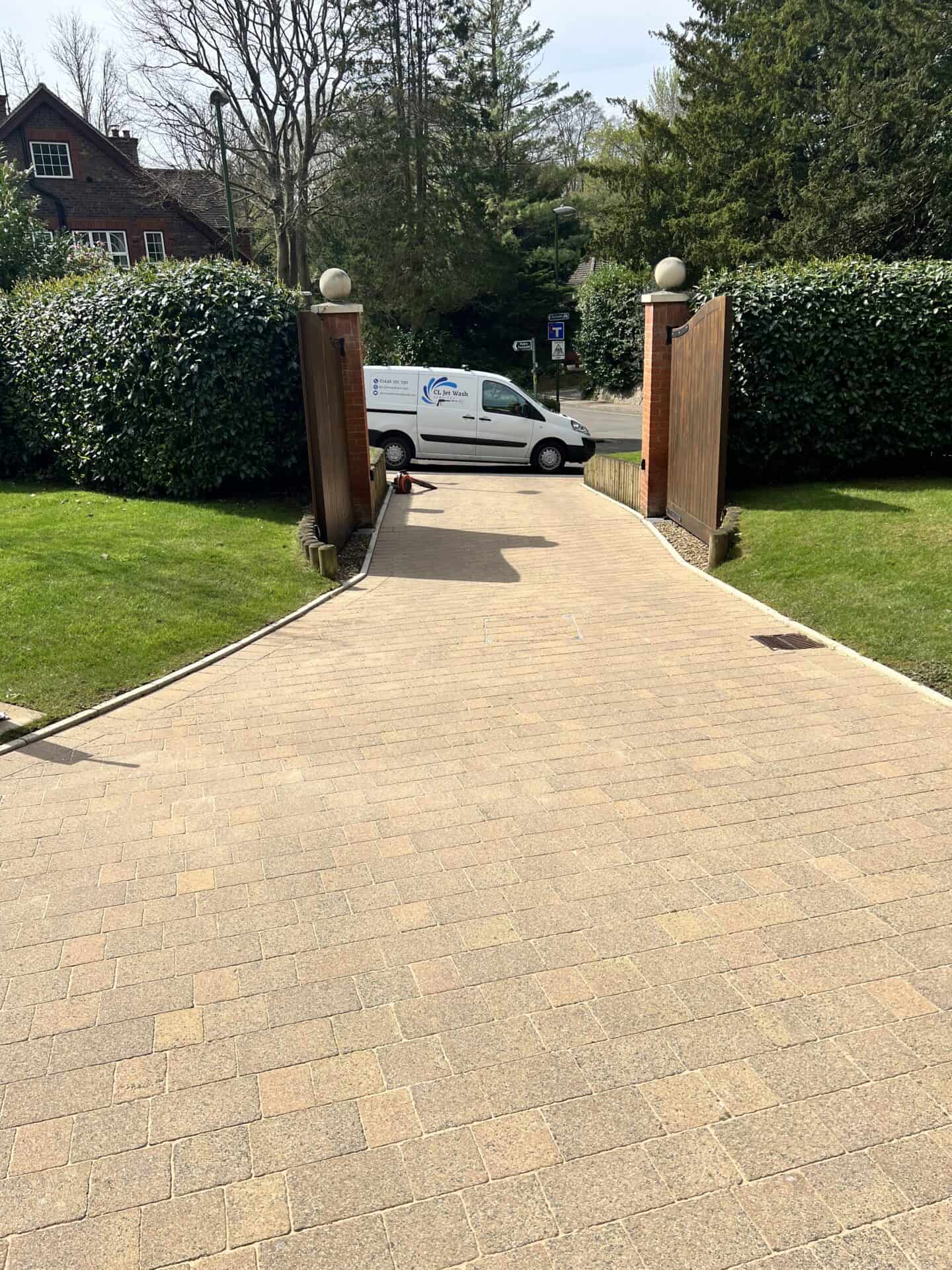
Pressure washing is a popular way to restore the appearance of outdoor surfaces that have become covered in dirt, grime, moss and algae. A driveway that once looked bright can gradually become dark and discoloured, while patios, paths and exterior walls may develop staining after prolonged exposure to the British weather.
Using pressurised water can remove a considerable amount of this contamination, but it is important to understand that not every surface should be cleaned in the same way. Materials differ in strength, texture and durability, and a technique that works well on one area could damage another.
Excessive pressure can remove jointing material, mark softer paving, damage protective finishes or force water into vulnerable areas. Even relatively durable materials may be affected if they are already cracked, worn or poorly maintained.
At CL Jet Wash Services, we provide professional pressure washing and exterior cleaning in Horsham and across Sussex. Our services cover a range of outdoor surfaces, and we consider the material, condition and level of contamination before deciding on a suitable cleaning approach.
Understanding how pressure washing works and where additional care is required can help you maintain your property without creating avoidable problems.
How Does Pressure Washing Work?
Pressure washing uses a pump to deliver water through a nozzle at pressure. The force of the water helps dislodge dirt, grime and other contamination from suitable surfaces, making it possible to clean areas that would otherwise require considerable manual effort.
The results depend on several factors, including the equipment being used, the pressure setting, water flow, nozzle design and the distance between the nozzle and the surface. The type of contamination also matters, as loose dirt behaves differently from established moss or deeply embedded staining.
Using more pressure does not necessarily produce a better result. A suitable technique should remove contamination effectively while protecting the material beneath it. This may involve adjusting the equipment, using specialist surface-cleaning tools or choosing an alternative cleaning method.
Understanding the Difference Between Pressure Washing and Soft Washing
Pressure washing relies primarily on the mechanical action of pressurised water. It is commonly used on suitable hard surfaces, including many driveways, paths and patios.
Soft washing uses lower-pressure application alongside appropriate cleaning treatments where necessary. It can be more suitable for certain exterior finishes that may be damaged by forceful water, including some types of render and other delicate surfaces.
Neither approach is automatically right for every job. The choice depends on the material, the condition of the surface and the type of contamination being removed.
For example, a concrete driveway may tolerate a more intensive cleaning process than a rendered wall. A surface covered in algae may also need a different treatment from one affected by oil staining.
Understanding these differences is an important part of achieving a thorough clean without putting the surface at unnecessary risk.
Can You Pressure Wash a Driveway?
Driveways are among the outdoor surfaces that commonly benefit from professional pressure washing. They are exposed to vehicle traffic, rainwater, mud, tyre marks, fallen leaves and organic growth throughout the year.
As dirt and algae accumulate, the surface can gradually lose its original appearance. Moss may develop in shaded areas, while oil and other vehicle-related stains can leave persistent marks. Professional cleaning can help remove much of this build-up and restore a cleaner, more presentable finish.
However, the right method depends on the driveway material.
Block Paving
Block paving can collect dirt, weeds and moss between individual blocks. Pressure washing can help remove this contamination, but care is needed because excessive pressure may dislodge jointing sand.
After cleaning, the joints may need to be refilled with suitable kiln-dried sand, depending on the condition of the driveway and the paving system. The blocks should also be checked for movement or damage, as cleaning will not correct underlying installation problems.
A controlled approach is particularly important on older driveways, where the joints may already have deteriorated.
Concrete Driveways
Concrete is generally robust and can be suitable for pressure washing when it is in reasonable condition. Dirt, algae and general grime can often be removed effectively, improving the overall appearance of the driveway.
However, concrete is not indestructible. Older surfaces may contain cracks, worn areas or weakened sections that could be affected by excessive pressure. Oil stains can also be difficult to remove because concrete is porous and may absorb contaminants over time.
Where staining is particularly stubborn, a suitable treatment may be needed alongside pressure washing. Even then, deeply embedded marks may not disappear completely.
Tarmac and Resin-Bound Surfaces
Tarmac and resin-bound driveways need a more controlled approach than some traditional hard surfaces. Excessive pressure or unsuitable cleaning products may damage the surface, particularly if it is already worn or deteriorating.
The aim should be to remove contamination without loosening material or affecting the finish. Following the manufacturer’s recommendations is particularly important where specialist surfacing systems have been installed.
CL Jet Wash Services provides driveway cleaning in Horsham for a range of common driveway materials. Assessing the surface before cleaning helps determine the most appropriate method for the job.
Is Pressure Washing Suitable for Patios?
Many patios can be cleaned effectively using suitable pressure washing equipment, but paving materials vary considerably in their characteristics.
Concrete slabs and paving blocks are often suitable for professional cleaning when they are in good condition. Dirt, algae and moss can collect across the surface and between joints, gradually making the patio look darker and less inviting.
Natural stone requires more careful consideration because different types of stone vary in porosity, hardness and sensitivity to cleaning products. Some materials can tolerate a more intensive process, while others need lower pressure to protect their texture and appearance.
Porcelain paving also benefits from an appropriate cleaning method. Although it is generally straightforward to maintain, contamination can still accumulate on the surface and around the joints. Unsuitable equipment or chemicals may damage the finish or affect adjacent materials.
The condition of the patio is just as important as its material. Loose slabs, cracked paving and deteriorating joints should be identified before cleaning begins. Where repairs are needed, these should be considered separately rather than relying on cleaning to resolve the problem.
A suitable professional approach takes all these factors into account, helping restore the appearance of the patio while reducing the risk of unnecessary damage.
Can Pressure Washing Damage Render?
Rendered walls need a different approach from most driveways and patios. Render forms an exterior finish over a building’s walls, and its condition can be affected by age, weather exposure, cracking and the quality of the original installation.
Using excessive pressure may damage the surface, loosen weakened material or force water into existing cracks. This can be particularly problematic where the render has already begun to flake or separate from the wall beneath it.
Why Soft Washing May Be More Appropriate
Soft washing may be suitable for certain rendered surfaces because it uses lower-pressure application and appropriate cleaning treatments rather than relying on forceful water impact.
It can help address algae, surface staining and other organic growth, although the correct treatment depends on the type of render and the condition of the wall.
Before cleaning, the surface should be checked for visible defects and any areas where water could enter the building fabric. Existing damage may need to be repaired before cleaning is undertaken.
CL Jet Wash Services provides professional render cleaning as part of its wider exterior cleaning service. The website explains how different surfaces are assessed so that a suitable method can be selected for the property.
What About Roof Cleaning?
Roof cleaning requires particular care because roofing materials, fixings and weatherproofing systems can be vulnerable to damage. Using a high-pressure washer without understanding the roof’s construction may dislodge tiles, damage the surface or force water beneath the coverings.
For many roofs, controlled moss removal and an appropriate treatment may be more suitable than aggressive pressure washing. The right approach depends on the type of roof covering, its age, its condition and the level of moss or other contamination present.
Safety must also be considered. Working at height can create significant risks, particularly when surfaces are wet or slippery. Homeowners should not attempt roof cleaning without suitable training, access equipment and safety arrangements.
If your roof has extensive moss growth or visible deterioration, seek advice from a suitably experienced professional who can assess the surface and recommend an appropriate approach.
Why the Cleaning Technique Matters
The condition of the equipment and the technique used by the operator both influence the outcome of a pressure washing job. A suitable machine can still cause damage if it is used incorrectly, while a controlled method can help produce an even finish across an appropriate surface.
The nozzle, distance, water flow and pressure all need to be considered. For larger hard surfaces, specialist surface-cleaning equipment can help achieve a more consistent result than using a narrow water jet alone. Delicate materials may require a lower-pressure method or a completely different cleaning process.
The type of contamination matters too. General dirt and algae may respond well to suitable pressure washing, whereas oil staining can require an appropriate cleaning treatment before the surface is washed.
Professional exterior cleaning is therefore about more than removing visible dirt. It involves understanding the surface, selecting a suitable process and recognising when a particular method is not appropriate.
Common Pressure Washing Problems to Avoid
One common mistake is assuming that the highest pressure setting will always produce the best result. In reality, excessive pressure can damage paving, disturb joints and leave visible marks. The correct setting should be based on the material and the condition of the surface.
Another problem is holding the nozzle too close. Water delivered at close range can have a more aggressive effect, particularly on softer materials and weakened surfaces. Maintaining an appropriate distance helps reduce the risk of damage.
Cleaning products also need to be selected carefully. An unsuitable chemical may discolour a surface, damage a protective coating or affect nearby plants. Products should be compatible with the material and used according to the manufacturer’s instructions, with runoff managed responsibly.
Finally, existing damage should never be ignored. Cracks, loose paving and deteriorating finishes can influence the safest cleaning method. Inspecting the area before work begins helps identify these concerns and prevents cleaning from being treated as a substitute for necessary repairs.
When Is Professional Exterior Cleaning Worthwhile?
Professional exterior cleaning can be particularly useful when large areas have become heavily contaminated or when the surface requires a more careful approach than domestic equipment can provide.
A driveway covered in moss and grime may need specialist equipment to achieve an even finish. A patio made from natural stone may require a more controlled method, while rendered walls could be better suited to soft washing.
At CL Jet Wash Services, we provide exterior cleaning for homeowners, landlords, commercial customers and property managers across Horsham and Sussex. Our work includes driveways, patios, roofs, render and tennis courts, with the cleaning method selected according to the surface and its condition.
If several outdoor areas need attention, it may be worth considering them together. For example, a driveway clean can be combined with suitable decking cleaning in Horsham to help refresh other parts of your garden.
You can learn more about the company, its experience and the services it provides on the About page.
Arrange Professional Pressure Washing in Horsham and Sussex
Pressure washing can transform the appearance of suitable outdoor surfaces, but it is important to choose the right approach. Driveways, patios and paths may benefit from controlled pressure washing, while render, roofing materials and delicate finishes can require alternative techniques.
CL Jet Wash Services provides professional exterior cleaning in Horsham and across Sussex, helping homeowners and businesses maintain cleaner, more presentable outdoor spaces. We assess the surface before selecting a suitable method, with the aim of achieving an effective clean while reducing the risk of unnecessary damage.
If you are unsure how best to clean a driveway, patio or exterior wall, visit CL Jet Wash Services to explore the available services. You can also use the website’s contact options to request a free, no-obligation quotation for your property.