

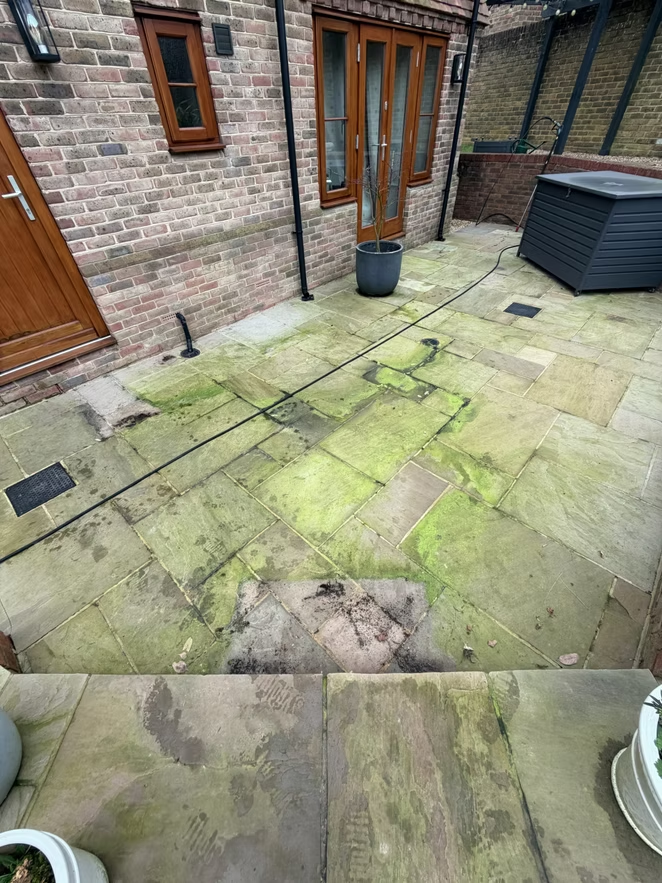
Few things are more frustrating than cleaning your driveway or patio, only to notice green patches beginning to appear again a few weeks or months later. You may have spent time removing dirt and grime, restored the appearance of the paving and felt pleased with the result, only to find that damp conditions gradually bring the problem back.
Moss and algae are common on outdoor surfaces throughout the UK, particularly in areas that receive limited sunlight or remain damp after rainfall. Driveways, patios, garden paths and exterior walls can all become affected, with the extent of the growth depending on the material, the surrounding environment and the condition of the surface.
Although professional cleaning can remove established contamination, it cannot guarantee that moss and algae will never return. New growth can develop when the conditions remain favourable, which is why understanding the underlying causes is just as important as cleaning the surface itself.
At CL Jet Wash Services, we provide professional exterior cleaning in Horsham and across Sussex, helping homeowners restore driveways, patios and other outdoor surfaces affected by dirt, moss, algae and weathering.
Understanding why organic growth returns can help you manage your property’s exterior more effectively and decide when professional cleaning is worthwhile.
What Is the Difference Between Moss and Algae?
Moss and algae are often mentioned together because they can develop in similar environments and affect many of the same surfaces. However, they are different organisms and do not always appear in the same way.
Moss is a small plant that commonly grows in damp locations. It can establish itself between paving slabs, within block paving joints and across surfaces where moisture and suitable growing conditions are available. As it develops, it can create raised or uneven patches that retain moisture and make paving look neglected.
Algae are simpler organisms that can grow on damp outdoor surfaces. They often appear as a green, dark or slippery film across patios, paths and walls. Because algae can spread across relatively large areas, it may be responsible for the discoloured appearance that develops on paving after prolonged wet weather.
Both can affect the appearance of your property, but the appropriate cleaning method depends on the material and the type of growth present. A treatment that works well for one surface may not be suitable for another, so it is important to consider the paving’s condition before attempting to remove established contamination.
How Moss Becomes Established on Paving
Moss can develop where moisture, suitable conditions and a place to grow are available. Small amounts of dust, soil and organic debris often accumulate in the joints between paving blocks or within imperfections on the surface. These areas can provide favourable conditions for moss to establish itself.
Once growth begins, it may gradually spread to nearby sections, particularly if the paving remains damp for extended periods. Block paving, older patios and garden paths can all be affected, although the amount of growth depends on the location and how well the surface is maintained.
Removing leaves and debris regularly can help reduce the material that accumulates between slabs. However, once moss has become established, routine sweeping may not be enough to remove it completely. More thorough cleaning may be necessary to restore the appearance of the paving.
Why Algae Can Make Outdoor Surfaces Slippery
Algae often develops as a thin film across paving, particularly where rainfall and shade prevent the surface from drying quickly. Green patches may initially appear to be a cosmetic problem, but they can also contribute to slippery conditions when the surface is wet.
This is particularly important around garden entrances, steps, paths and areas used frequently by children, older relatives or visitors. A patio that looks relatively clean in dry weather may become much more slippery after rainfall if algae has accumulated.
Cleaning can help remove the growth responsible for these conditions, but it is important to choose a suitable method for the surface. If the paving remains persistently damp, continued maintenance may be necessary to manage future growth.
Why Does Moss and Algae Grow Faster in Some Gardens?
Not every driveway or patio develops organic growth at the same rate. Two neighbouring properties may experience very different levels of moss and algae because of differences in sunlight, drainage, vegetation and paving materials.
Understanding these conditions can help explain why certain sections of your property repeatedly become dirty, even after the rest of the surface has been cleaned.
Shaded Areas Take Longer to Dry
Sunlight plays an important role in helping outdoor surfaces dry after rainfall. Where a patio sits beneath trees, beside a tall fence or alongside a building, it may receive less direct sunlight throughout the day.
These shaded areas can remain damp for longer than exposed paving, creating conditions that favour moss and algae. North-facing gardens and enclosed courtyards may experience similar problems, particularly when ventilation is limited.
If the same section of your patio repeatedly develops green patches, consider how much sunlight it receives and whether overhanging vegetation is contributing to the problem. Although removing shade is not always practical, keeping the surface clear of debris and arranging appropriate cleaning can help manage the build-up.
Poor Drainage Can Encourage Recurring Growth
Water that collects on outdoor paving can create another problem. Low spots, uneven slabs and blocked drainage channels may prevent rainwater from draining away efficiently, leaving sections of the surface damp for longer than necessary.
If puddles repeatedly form in the same place, cleaning alone may not resolve the underlying issue. The cause could be related to the slope of the paving, a drainage obstruction or changes in the surface over time.
Inspect your driveway and patio after rainfall to see whether water drains away as expected. Where persistent pooling occurs, the underlying problem may need to be investigated separately.
Addressing drainage issues can help reduce prolonged dampness and make outdoor areas easier to maintain, although it will not eliminate every possible cause of moss and algae.
Leaves and Organic Debris Retain Moisture
Fallen leaves, soil, grass cuttings and other organic material can accumulate on driveways and patios throughout the year. During autumn, this build-up can become particularly noticeable, especially in gardens surrounded by mature trees and hedges.
As debris remains on the paving, it can retain moisture and contribute to staining. Material also tends to collect in corners, along borders and between slabs, where it may be overlooked during routine maintenance.
Regular sweeping helps remove this material before it accumulates. It is a simple task, but one that can make a meaningful difference to how quickly dirt and organic growth develop.
Some Surfaces Retain More Dirt and Moisture
Different paving materials have different textures and levels of porosity. Rougher or more porous surfaces may retain moisture and provide spaces where dirt and organic material can accumulate. Smoother surfaces may be easier to maintain, although they are not immune to algae or other contamination.
The condition of the paving also matters. Worn surfaces, damaged joints and small imperfections can make cleaning more difficult, particularly where contamination has accumulated over several seasons.
For example, block paving may develop moss between the joints, while concrete can become discoloured by general grime and algae. Resin-bound surfaces require a suitable cleaning method to protect the finish, and natural stone may need a more controlled approach depending on its characteristics.
CL Jet Wash Services provides professional driveway cleaning in Horsham for common surfaces including block paving, concrete, tarmac and resin. Assessing the material before cleaning helps determine the most appropriate method for removing the contamination.
Can Pressure Washing Remove Moss and Algae?
Pressure washing can be an effective way to remove moss, algae and general grime from many suitable outdoor surfaces. The force of the water helps dislodge contamination, restoring a cleaner appearance to driveways, patios and paths.
Professional equipment can be particularly useful where organic growth has spread across a large area or where routine maintenance has not been sufficient to remove established contamination.
However, the technique must be suitable for the material being cleaned. Excessive pressure can disturb jointing sand, damage weaker surfaces or leave visible marks. Older paving may require more care, while certain delicate materials may be better suited to an alternative cleaning method.
The aim is to remove the growth effectively without causing unnecessary damage to the surface.
Why Moss and Algae Can Return After Pressure Washing
Pressure washing removes existing contamination, but it does not necessarily change the conditions that allowed the growth to develop. If a patio remains shaded and damp, new algae may gradually appear. Similarly, a driveway beneath overhanging trees may continue to collect leaves and organic debris.
This does not automatically mean the original clean was unsuccessful. Outdoor surfaces remain exposed to rain, airborne particles and natural sources of new growth, so some degree of ongoing maintenance should be expected.
The best approach is to combine appropriate professional cleaning with simple maintenance measures. Keeping the surface clear of debris, monitoring shaded areas and addressing drainage problems where necessary can help slow the return of contamination.
Depending on the surface and the circumstances, a suitable post-clean treatment may also be considered. Such products should be compatible with the material and applied according to the manufacturer’s instructions.
Are Chemical Treatments Better Than Pressure Washing?
Cleaning treatments can be useful for certain types of organic growth, but they are not automatically a better option than pressure washing. The most appropriate method depends on the material, the condition of the surface and the type of contamination being removed.
Some treatments are designed to help break down or control moss and algae, while others are intended for particular types of staining. However, an unsuitable product can discolour paving, damage a surface finish or harm nearby plants if it is used incorrectly.
When a Cleaning Treatment May Be Appropriate
A suitable treatment may be useful where organic growth is particularly established or where a lower-pressure approach is preferable. Certain exterior walls and delicate surfaces, for example, may benefit from soft washing rather than aggressive pressure washing.
The treatment should be compatible with the material and applied according to the manufacturer’s guidance. It is also important to consider how runoff will be managed, particularly around garden beds, drainage systems and watercourses.
No treatment should be assumed to provide permanent protection against future growth. The surface will remain exposed to weather and environmental conditions, so continued maintenance may still be necessary.
Why One Cleaning Method Does Not Suit Every Surface
A product suitable for concrete may not be appropriate for natural stone, resin-bound paving or rendered walls. Likewise, a cleaning technique that works well on a driveway could damage timber decking if applied incorrectly.
This is why assessing the surface before cleaning is important. The aim is not simply to remove visible growth, but to choose a process that is effective for the contamination and appropriate for the material.
If you are unsure whether a cleaning product or pressure setting is suitable, seek advice before applying it across the entire surface.
How Can You Slow the Return of Moss and Algae?
Although it is not always possible to prevent organic growth entirely, a few straightforward maintenance habits can help keep outdoor surfaces cleaner for longer.
Regularly sweeping your driveway, patio and paths removes leaves, soil and other organic material before it becomes embedded. This is especially useful during autumn and winter, when damp conditions and falling debris can accelerate the build-up of contamination.
It is also worth paying attention to areas that remain wet after rainfall. Check whether drainage channels are clear and whether water regularly collects in the same place. If persistent pooling appears to be caused by uneven paving or a drainage issue, investigate the underlying cause rather than relying on repeated cleaning.
Where overhanging vegetation contributes to shade and debris, appropriate garden maintenance may also help. Trimming back certain branches or clearing leaves from the paving can improve the amount of light reaching the surface and reduce the material that accumulates.
Finally, address early signs of growth rather than waiting until the entire surface becomes heavily contaminated. Small patches may be easier to manage than widespread moss and algae, particularly when they are noticed before becoming firmly established.
These measures will not eliminate every source of organic growth, but they can make ongoing maintenance more manageable.
What About Moss and Algae on Decking and Exterior Walls?
Moss and algae can affect more than patios and driveways. Decking, rendered walls and other outdoor structures may also develop organic growth when conditions are damp or shaded.
Decking needs particular care because timber and composite materials have different cleaning requirements. Excessive pressure can roughen timber, damage wood fibres or affect the surface finish. A suitable cleaning method should take account of the material and the manufacturer’s recommendations.
If algae has developed on a decked seating area, regular removal of leaves and debris can help reduce moisture retention. Where a more thorough clean is required, professional cleaning can help restore the appearance of the surface while reducing the risk of unnecessary wear. CL Jet Wash Services offers decking cleaning in Horsham for homeowners looking to maintain their outdoor living areas.
Rendered walls can also develop green staining, particularly where moisture and shade encourage organic growth. Because render may be vulnerable to aggressive pressure washing, a more controlled approach can be appropriate. Soft washing may be suitable for certain finishes, depending on their condition and the type of contamination present.
Before cleaning decking or render, inspect the surface for existing damage and choose a method that is appropriate for the material. This helps ensure that the cleaning process addresses the contamination without creating additional problems.
How Often Should Outdoor Surfaces Be Professionally Cleaned?
There is no single cleaning schedule that suits every property. A driveway exposed to direct sunlight and regular vehicle use may develop a different pattern of contamination from a patio beneath mature trees. Similarly, a shaded garden path may require attention more frequently than an open area of paving.
The most practical approach is to monitor the condition of your outdoor surfaces and arrange professional cleaning when the build-up becomes difficult to manage through routine maintenance.
Some properties may benefit from an annual professional clean, while others may remain in good condition for longer. The frequency will depend on the surface material, its exposure to moisture and debris, the amount of use it receives and how quickly organic growth returns.
If your driveway or patio repeatedly develops slippery patches, extensive green growth or stubborn staining, professional cleaning may be worthwhile. It is also important to consider the condition of the paving itself, as cleaning cannot repair loose slabs, damaged joints or underlying drainage problems.
CL Jet Wash Services provides exterior cleaning across Horsham and Sussex, helping homeowners maintain driveways, patios and other outdoor areas. You can learn more about the business and its approach to exterior cleaning on the CL Jet Wash Services About page.
Get Help with Moss and Algae from CL Jet Wash Services
Moss and algae are common problems for outdoor surfaces in the UK, particularly where paving remains damp, receives limited sunlight or collects organic debris. Although these conditions cannot always be eliminated, understanding what causes recurring growth can help you manage it more effectively.
Regular sweeping, suitable drainage, prompt attention to early growth and professional cleaning can all contribute to cleaner, more presentable outdoor spaces. Choosing an appropriate cleaning method is equally important, as different surfaces require different levels of care.
CL Jet Wash Services provides professional exterior cleaning in Horsham and across Sussex, helping homeowners tackle moss, algae, dirt and staining on suitable outdoor surfaces. Whether your driveway has become discoloured or your patio needs a thorough clean, we can help you explore an appropriate solution for your property.
Visit CL Jet Wash Services to find out more about our exterior cleaning services and use the website’s contact options to request a free, no-obligation quotation.